recipes

Stock or Bouillon

It should come as no surprise to you that I consider good stock to be the single most important ingredient to have on hand in the kitchen; regardless of what the recipe says, a stock cube crumbled in water is no substitute and often adds unwanted saltiness. We are lucky to be able to buy commercially prepared stock these days and this is quite good. Always have chicken, beef and vegetable stock on hand, whether it be commercially or home made, and when a recipe tells you to add water, think about whether substituting stock would be an improvement. When Nanya boiled peas, beans or carrots, (never vegetables of the cabbage family, such as broccoli, brussels sprouts or cauliflower,) the water was always kept to be added to gravies or soups.

 Campbell’s make a chicken consommé and a beef consommé, sold as canned soups, and these are excellent, as in both the stock has been reduced to a jelly and then clarified. They also make chicken, beef, fish and vegetable stocks, which are very acceptable.

 Stocks add depth to dishes. They transform soups, sauces, gravies, casseroles and a host of other dishes from ‘thin’ and uninteresting, to tasty and satisfying. The three basic stocks are chicken and beef, often called ‘bouillon’, and fish, which is often referred  to as ‘fumet’. You will notice that a fish fumet is made using white wine, although if the fumet is destined to be fish soup, the wine can be added later when the soup is being made.

 The technique for making beef stock is different from that of ‘white’ chicken stock.  It is the same, however, for roasted chicken stock. With beef stock, the beef, bones, chicken carcasses and some of the vegetables are usually roasted with a little oil or fat in a baking dish for an hour or so before being added to the stock pot. This procedure helps to colour the stock, and if it is not done at this early stage, no amount of simmering later will achieve the same result. Veal bones are often used, either with beef bones or on their own. Mushroom skins or stems and brown onion skins add colour. If making an ox-tail consommé, the beef bones should obviously be ox-tail. You will notice that demi-glace is really nothing more than a very sumptuous beef bouillon simmered very slowly for a very long time until it has reduced to sauce consistency.

 Chicken stock is very easy to make, especially now that boned chicken breasts and thighs are more popular than whole chickens and most specialty chicken shops are trying desperately to get rid of the carcasses. Unfortunately some of them are mincing all their carcasses for pet mince; while this is great for the pets, it could become a disaster for cooks. Whole chickens can be used, but this is obviously expensive and quite unnecessary. If using a whole chicken, always supplement it with extra carcasses.
Herbs (handy tips)

Herbs

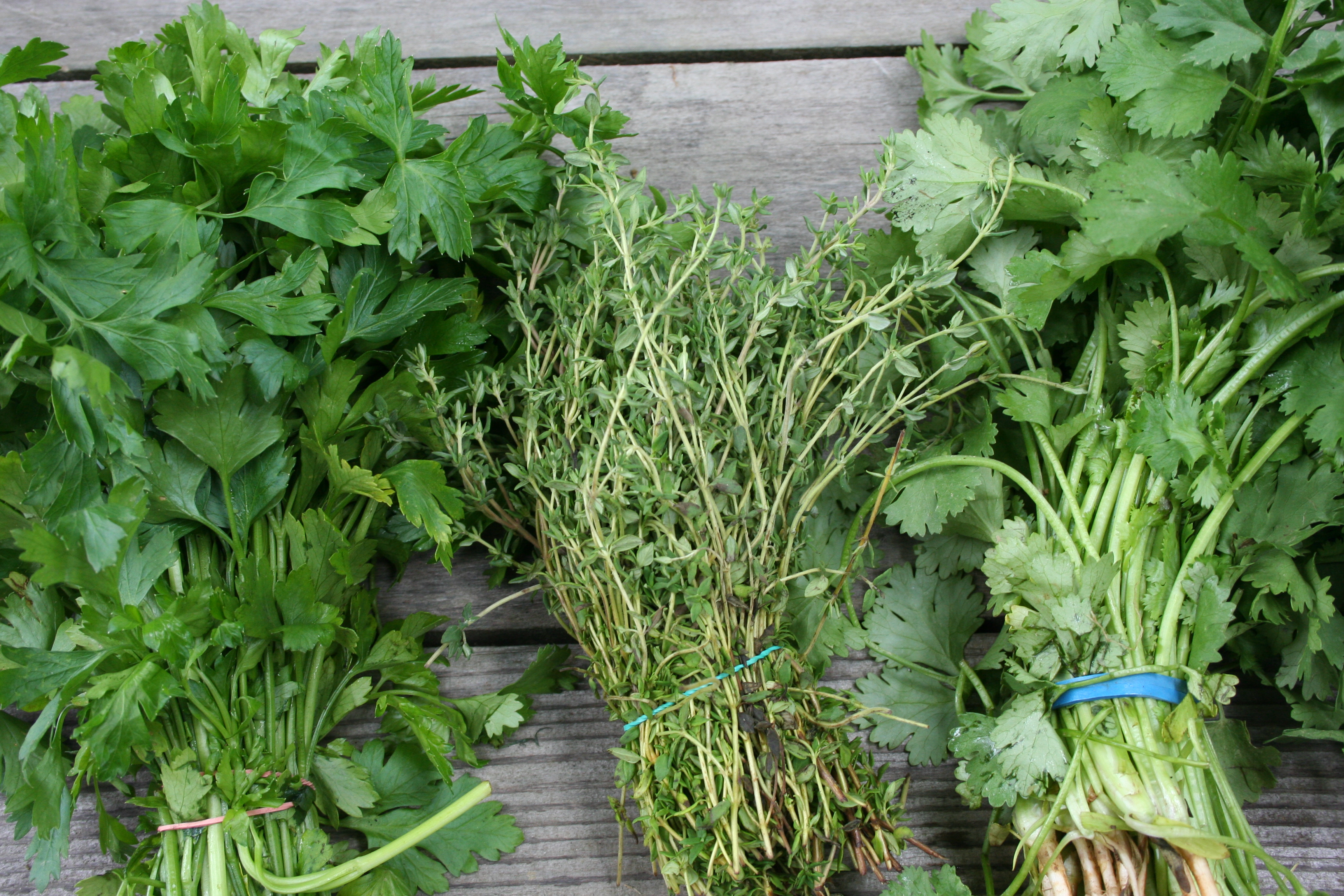
Milly* can keep herbs fresh for weeks. I was in charge of herbs on our last reef trip on ‘Taslander’, and no doubt will be again this year. Nobody could believe that they could last the distance. Because I have most herbs growing I tend to be lazy about storing them, but Milly is a marvel. First she washes them well, shakes them out to dry, then leaves them for an hour or so to dry completely. Then she places a double sheet of absorbent kitchen paper in the bottom of a plastic take-away container and adds the herbs.
Even Milly can’t help with coriander, which is the most impossible of all herbs to store fresh. It is quite easy to grow, but has the annoying habit of going to seed as soon as it reaches maturity. If you want coriander on hand at all times, chop it finely, and pack it into ice block trays. Cover with water and freeze. When frozen, remove the blocks of frozen coriander from the ice block trays, place in plastic bags and seal. The ice-blocks will keep indefinitely in the freezer.
Kaffir lime leaves, called ‘makrut’ in Thailand, are the peculiar double leaves of the Thai lime tree. They are available dried from any good Asian supermarket, but if you are lucky enough to have some friends (like Bob and Anne Douglass) with a kaffir lime tree, ask them if they could spare some leaves and simply freeze them in zip-up plastic bags.
A lot of people seem to think that dill and fennel are the same plant. They are not, although both have the same feathery tops and both have the same slightly aniseed taste. If planted together they will cross-fertilise and you will end up with either all dill or all fennel. I can’t remember which. If you don’t believe me, dill is Anethum graveolens, fennel is Foeniculum vulgare dulce. Why two such unrelated plants are able to cross-pollinate is beyond me. Fennel has a swollen bulb-like base, which tastes of aniseed; it is sometimes sold as ‘aniseed’ rather than fennel.
Greek basil is not the same as sweet basil. Greek basil is a perennial plant that will grow easily from a cutting. Sweet basil is used extensively in Thai and Vietnamese cooking. It has a larger leaf than Greek basil and is an annual, not a perennial, and can only be grown from seed. Never use Greek basil in Thai or Vietnamese cooking.

*Publishers note: Milly was mum’s mum who was given the nickname Milly for Mother-In-Law by my dad. I was about 4 before I realised that  she was my grandma because I only knew her as Milly. We called her that all her life. x

Photo: frugallysustainable.com

Bechamel sauce

Bechamel-sauce
Many recipes will tell you to use hot milk when making a bechamel sauce. In fact, I don’t know of anybody who does. Do try not to use milk that has come straight from the refrigerator.

50g butter
50g milk
600ml milk

Melt butter in a saucepan and add the butter. Stir to combine. Cook the roux over gentle heat to cook the flour. Remove the saucepan from the heat and add a little of the milk. Stir well, pressing any lumps out with the spoon. Add a little more milk and repeat. You must eliminate the lumps before returning the pan to the heat. When the mixture is smooth, return to heat and cook until it thickens. Remove from heat again and add more milk. Stir vigorously until the sauce is again smooth. If any lumps are left in the sauce in its early stages, they will be almost impossible to remove later. Remember that it is the addition of a cold liquid to a hot base that causes the lumps to form, so the saucepan must always be off the stove when the milk is added. Continue to stir until there are no lumps, add more milk then cook until the sauce reaches the desired consistency. Season with salt and pepper if desired.

Sauce Creme
Sauce Crème is a white sauce made using some cream to replace some of the milk. Obviously it is richer than béchamel sauce.

(Photo: Heraldsun.com.au)

White sauces

White sauce is the generic name for a whole collection of sauces having one thing in common: they are based on a roux of equal weights of butter and flour. They are called white sauces because the roux is not coloured and the resulting sauce remains white. It is the liquid that usually varies in white sauces. Technically, the sauce we know as white sauce is actually bechamel sauce, the liquid used being milk. With all white sauces the proportions are 50g butter, 50g flour and 600ml liquid to give 600ml of sauce. In all white sauces it is important to fry the roux gently to ‘cook’ the flour. This breaks up the gluten content of the flour and ensures that the resulting sauce does not have a floury taste that no amount of cooking will remove later.  

Eggs Florentine (Authentic)

Eggs Florentine (Traditional)

This recipe, like Eggs Benedict, is constantly being bastardised. Eggs Florentine, or more correctly, Oeufs poches florentine, is a creation of Auguste Escoffier, the father of modern French cuisine. It does not use hollandaise sauce, but bechamel sauce to coat the poached eggs. Escoffier did his Eggs Florentine as a sort of communal dish, containing up to 8 poached eggs. I think everybody nowadays would prefer their Eggs Florentine served in individual ramekins, or perhaps two poached eggs in cocotte dishes. The quantities here are Escoffier’s and, are very vague as all his receipts (yes, receipts) are.

250g spinach
6 – 8 poached eggs
Bechamel sauce
1 – 2 egg yolks
Grated cheese (I would use Gruyere or Parmesan)
Salt and freshly ground black pepper (presumably)

Cook the spinach in boiling salted water and drain thoroughly. Chop and return to the pan with a little butter. Cook for a few minutes, then turn into a fireproof dish. (I think I would wilt the spinach in a little butter, drain off the water released by the spinach, then transfer the spinach to a fine sieve. Press down on the spinach to release as much water as possible, then divide the spinach among the individual ramekins or cocotte dishes.)

Preheat the griller to hot.

Arrange the eggs on top of the spinach. These can be eggs poached in advance and reheated just before using.

Add 1 or 2 egg yolks to the standard bechamel sauce to prevent it turning under the griller, then coat the reheated and well-drained eggs with the sauce.

Sprinkle with grated cheese, add a little melted butter and brown lightly under the griller before serving.

(You could add the cheese to the white sauce, stirring well to melt it, and then coat the eggs with what would now be a mornay sauce. Brown lightly under the griller before serving.)

Serves 3 – 4 in cocotte dishes, 6 – 8 in ramekins.

(Photo from Delicious.co.uk)

Faux eggs ‘Florentine’

Faux eggs florentine cropped
This is really just another take on the Eggs Benedict theme….poached eggs with hollandaise sauce, sitting on, this time, spinach. True ‘Eggs Florentine’, it is not, despite the fact that many breakfast-serving Brisbane restaurants are calling it that. I guess you can call anything sitting on spinach ‘florentine’! Nevertheless, the egg, spinach and hollandaise combination is quite delicious!

4 thick slices of sourdough bread
Olive oil
1 clove of garlic (optional)
Baby spinach leaves
8 poached eggs (these can be poached in advance and reheated, as they would be in a restaurant situation)
Hollandaise sauce (see Sauces)
Cayenne pepper
Sea salt and freshly ground black pepper
Chives, trimmed, but left long, to garnish

Brush both sides of the sourdough slices with a little olive oil and place under a hot grill for 1 – 2 minutes each side, until crisp and golden. Rub one side of each slice with the garlic clove.

Top each slice of sourdough with a generous quantity of baby spinach, top the spinach with 2 reheated and well-drained poached eggs. Spoon hollandaise sauce over the eggs.

Sprinkle with a little cayenne pepper, then season with sea salt and freshly ground black pepper.

Garnish with the chives and serve immediately.

Boeuf Bourguignonne (Beef Burgundy)

BEEF BOURGUIGNONNE

Beef Burgundy is one of the French classic casseroles; it is the beef equivalent of Coq au Vin. You will notice that neither dish contains the tomatoes that are so characteristic of the dishes of the Mediterranean coast. Use rump steak for this for best results.

1.5kg rump steak or oyster blade
Light olive oil for cooking
250g kaiserfleisch, or fatty bacon
2 tablespoons brandy
1 – 2 tablespoons plain flour
450ml red wine
300ml beef stock
4 French shallots, or a further 4 pickling onions, finely chopped
2 cloves garlic, finely chopped
3 teaspoons tomato paste
1 bouquet garni
Salt and freshly ground black pepper
12 – 14 tiny pickling onions
30g butter
150g button champignons or button mushrooms (buy the tiniest ones possible)

Cut the beef into 3cm cubes and the kaiserfleisch or bacon into bite size pieces. Heat oil in a heavy based frypan and heat a little of the olive oil until very hot. Sauté the kaiserfleisch or bacon until crisp, remove it to a plate and set aside. The bacon is not added to the casserole until near the end of cooking.

Add the meat in small batches to the oil and bacon fat in the frying pan and seal the meat on all sides until well browned. The colour achieved now will affect the final outcome of the casserole. When all the meat has been sealed, return it all to the pan and add the flour, mixing well with the meat to incorporate.

Gently heat the brandy in a small saucepan and making sure the exhaust fan is turned off, set the brandy alight. Pour the brandy over the meat and toss it through until the flame subsides. Place the meat in a heavy casserole.

Pour the stock into the pan with the red wine and de-glaze the frying pan, scraping any bits from the sides and bottom and stirring them well into the liquid. Add to casserole.
Heat a little more oil and gently sauté the garlic and shallots until tender. Some recipes add them to the casserole raw, but I prefer to cook them. Add to casserole, then add the tomato paste, the bouquet garni and season to taste. Make sure there is enough liquid in the casserole to cover the meat. If not, add more water or stock. Cover the casserole and place it in a preheated oven at 220C for 10 minutes, or as long as it takes for the mixture to come to the boil, then reduce temperature to 150 – 180C and allow to cook for about 1½ hours. Remove from oven and allow to cool.

Refrigerate overnight. Next day, remove all fat from the surface of the casserole.

Gently re-heat casserole on top of stove and add the bacon.

While casserole is re-heating, sauté the peeled whole pickling onions in the half the butter until they are beginning to colour and all are well glazed. Add to casserole. Trim the mushrooms and cut any that are too big in half, otherwise leave whole. Add the remainder of the butter to the pan and sauté the mushrooms for just a minute. Add the mushrooms only 10 minutes before serving time. Check the seasonings and serve garnished with chopped parsley.

You will note that I cook half this dish in the oven and finish it on top of the stove. I still believe that the French slow-simmered dishes are better cooked with heat surrounding them than sitting directly on the heat where the bottom is likely to catch and spoil the flavour.

Twice cooked duck breast with blood orange sauce

Twice cooked duck with Blood Orange Sauce

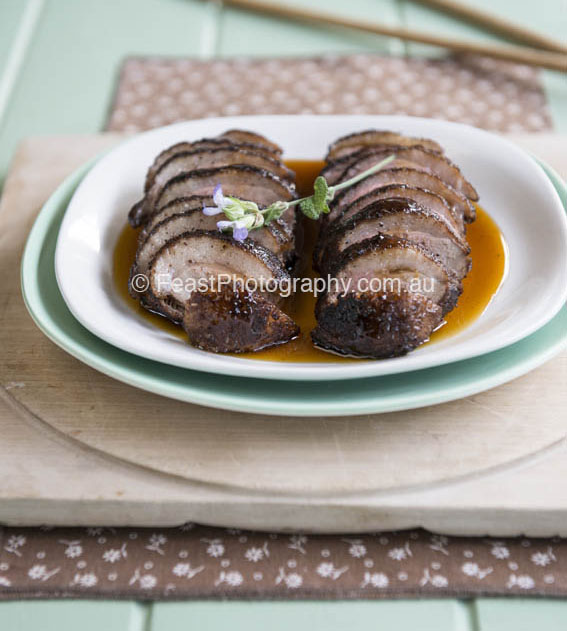
This has become one of my favourite ways of cooking duck breasts. They are tender, succulent and absolutely delicious and the sauce is wonderful too. This recipe also works well with duck legs (thighs and drumsticks).

1 teaspoon Chinese five-spice powder
4 duck breasts or 4 duck legs
500ml canola or grapeseed oil

Blood orange sauce:
Juice of 2 blood oranges (or substitute oranges, mandarins or tangelos)
170g (¾ cup) caster sugar
4 star anise
1 cinnamon stick
1 tablespoon light soy sauce
1 teaspoon Chinese rice vinegar

Bring a wok or large saucepan of water to the boil. Rub the five-spice powder over the duck pieces. Put some baking paper in the bottom of a large bamboo steamer. Prick holes in the paper with a fork or a skewer and arrange the duck on top. Cover with the lid and steam over the boiling water for 15 – 20 minutes. Remove the duck from the steamer, put on a plate and refrigerate, uncovered, for 3 hours or until completely cooled, or preferably overnight.
Strain the juice from the oranges and reserve two thick strips of peel.
Combine the sugar with 185ml water in a large saucepan and bring the mixture to the boil for 5 minutes to reduce, stirring to dissolve the sugar.  Add the orange juice, star anise the cinnamon stick and reserved strips of peel and allow to cook so that the sauce reduces. Remove from the heat and stir in the soy sauce and vinegar.
Heat the oil in a wok over high heat. When the surface of the oil is shimmering, lower the duck into the oil, skin side down. Cook for 2 minutes, then turn the duck and cook for a further 2 minutes. Repeat this, cooking for a further 2 minutes on either side.
Put the duck onto a plate, cover, and rest for 5 minutes.
Cut the breasts into thick slices and arrange on the serving plates. Spoon over the orange sauce and the star anise.
Serve with wilted Asian greens.

Serves4

Red cabbage with bacon and hazelnuts

 Red cabbage with hazelnuts and bacon

Red cabbage seems to work wonderfully with duck. We have used this recipe (sometimes with slices of peeled granny smith apple through the cabbage) with duck breasts for Christmas dinner. It is ridiculously easy but adds wonderful colour to any plate!

Olive oil
1 large onion, sliced
2 cloves garlic, crushed
½ red cabbage, shredded
125ml best red wine vinegar
½ cup brown sugar
½ cup parsley, preferably flat leaf
10 rashers finely sliced bacon, grilled until crisp*
½ cup hazelnuts, roasted and skinned

Roast and skin the hazelnuts.

Heat a heavy-based saucepan over medium heat and add a little olive oil. Add onion and garlic and sweat until onion is transparent. Add cabbage to pan and sauté until softened.

Add vinegar and brown sugar, mix lightly, cover and cook for 10 minutes. Remove lid and cook for a further 5 minutes.

Just before serving, fold in parsley, then top with crisp bacon and scatter with hazelnuts.

*To crisp the bacon, place in a single layer under the griller and grill until crisp. Drain on absorbent paper.

Baked Ham with Guinness and Cardamon Glaze

Baked Ham with Cardamon and Guinness Glaze

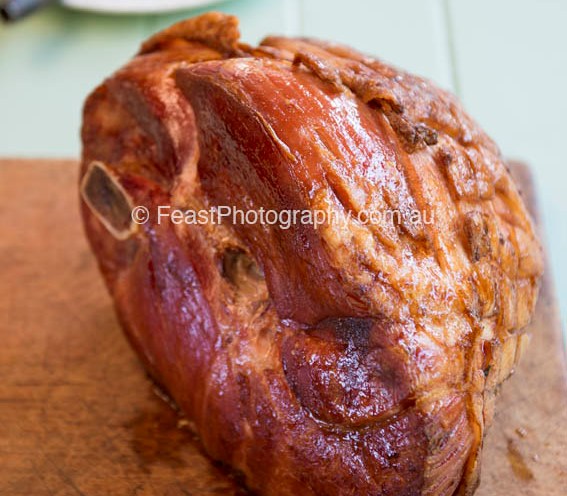
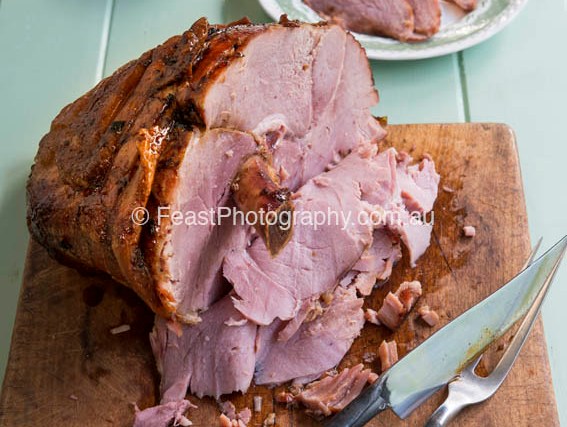
Dad doesn’t really like baked ham; we have a leg of ham so rarely that he feels that it is unnecessary. But every time we’ve served this it has been a huge success. It is probably the most succulent way to cook a ham.

Smoked or cooked leg ham, usually about 10-12 kg.
1½ cups Guinness stout
1 cup brown sugar
1 teaspoon dry mustard
1 teaspoon ground ginger
1 teaspoon ground cardamom
2 tablespoons stout extra

Garnish:
Thin pineapple slices
Parsley, finely chopped

Firstly, remove the skin from the ham. This can be done the night before, in which case the ham should be re-covered with the skin, then wrapped in aluminium foil and refrigerated overnight.

To remove the skin, preheat the oven to 160C and heat the ham, in a large baking dish, for ½ hour. Remove from oven and carefully peel the skin from the ham, using a small knife to help you. Try not to tear the fat. Score the fat in a diamond pattern; cut the skin off the bone and wrap the bone in aluminium foil.

Preheat the oven to 160C.

Pour 1½ cups of Guinness over the ham and bake for1 ½ – 2 hours depending on the size of the ham. Remove from oven and score the fat, cutting in even diagonal lines both ways, so that you create even diamond shapes over the surface. Baste with pan juices.

Increase oven heat to 200C.

Mix together the sugar and spices and add just enough stout to form a thick paste. Spread the paste over the ham and bake in hot oven for a further 30 minutes.

Remove from oven and decorate with chopped parsley. Arrange pineapple rings on platter with the ham if desired.

Baked Ham with Guiness and cardamon glaze