Introduction

Before you begin: Cooking your greens.

Did you know that you should never cook green vegetables with the lid on the saucepan?

Or that vegetables that grow beneath the ground such as potatoes, carrots etc. should always be started in cold water and that vegetables that grow above the ground such as beans, peas, broccoli, cauliflower, Brussels sprouts and cabbage should be started in boiling water?

Green beans

Did you know cutting a cross in the bottom of a Brussel sprout does not help it cook more evenly (unless steamed)? You are better off simply cutting the BS in half to cook.

Before you begin: Freezing stuff

92047481_10158216893007154_3520284757785051136_oBefore you freeze anything at all, think about the quantities in which you may want to use it later. This applies equally to meat, fish, and to such things as demi-glace, jus, gravy, stock and pureed fruit.
Generally speaking less is better.

There have been many occasions when I have had to thaw twice as much meat as I needed, twice as much demi-glace (that really is a waste) and up to four times as much stock.

None of these should be re-frozen, and none keep indefinitely in the refrigerator.

Even soup should not be frozen in large quantities unless it is for a specific occasion. Plastic containers with a 2 cup or 500ml capacity are a good investment. Make sure they are stackable. I thought Mrs. Crockett containers were great when I first discovered them, now I realise that they are far too big.

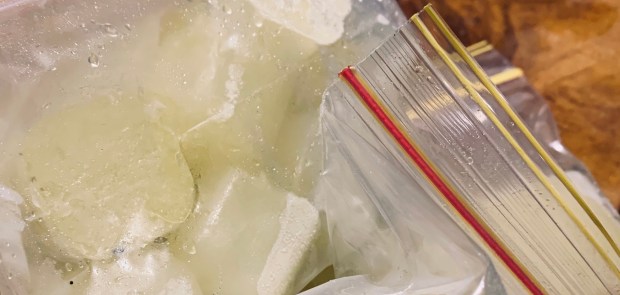
IMG_2167If you get an over abundance of limes or lemons, squeeze them and make small ice cubes. Use them for margaritas, Damascus slings or thai dressings. So much better than fake/concentrate juice.

Survivor tips for newbie chefs in Covid

I have just been laughing at a great YouTube guy who is hilariously teaching you how to cook some pretty simple stuff. And it made me think about mum’s cookbook and some of the really easy recipes in there as well as some pretty nifty tips that might be handy in our time of boredom.

As so many of us are doing, I’m using isolation time to look at the always therelist of things to do given time. Yes I am working from home but I am finding I do have more hours in the day thanks to no commute. One on my Corona list is progressing the Never Ending Cookbook By Mum by a few recipes.

Started before the age of MasterChef and MyKitchenRules, the recipes here are timeless classics. But they are of a style of cooking that doesn’t get the ratings – most ‘reality’ shows expecting Michelin starred sophisticated (performance art) experiences every time.

The recipes here are from 60s-2010 (50 years). There’s one from a CWA (Country Womens’ Association) recipe book which looks post WWII as well as some Ascot Kindergarten ones from the 70s.

They represent the ‘best of home style cooking’ – full of flavour, sometimes a splash more brandy than called for. These recipes they have all been dined on, praised and sometimes burnt by mum, me and my sisters too.

So while I’m not going to spend my free time doing awesome video productions, I will make sure I post a one of mum’s gem tips or an easy peasy recipe.

Anyway, to get on with the show, please enjoy mum’s tips on freezing stuff.

Before you begin – Shallots and Green onions

Image

Shallots, spring onions, scallions and now, ‘green onions’.  The word ‘shallot’ in a recipe always presents a dilemma. If the recipe book is written by an Australian, you can be fairly sure that what is meant by a shallot is a long green onion, rather like an overgrown chive. However, in an attempt to resolve an already confused situation, some Australian recipe books have begun referring to these as ‘green onions’.

A true shallot looks very much like a large clove of garlic. Also known here as a French shallot, its skin has a pinkish tinge, whereas garlic has white skin. There are also brown shallots, with brown skin. If you are reading a French recipe book and you have a choice, buy the French shallots. They are available here, but only at the better fruit and vegetable outlets. If you can’t buy French shallots, use small brown pickling onions as a substitute. Some Australian writers, such as Stephanie Alexander, have bitten the bullet and are calling a shallot a shallot.

In America, a shallot is a true French shallot. What we know as ‘shallots’ are called ‘scallions’. I do not know how this confusion arose, but I do wish somebody would fix it. That, of course, would mean re-educating every little fruit and vegie seller in Australia. Perhaps if the big supermarkets began a campaign, something might happen, but if there is no money in it for them, I can’t see it happening.

In this recipe book I have tried to be consistent and use the term ‘green onion’.

Before you begin – soy sauce

Soy Sauce. Not so very long ago you could simply buy a bottle of ‘soya sauce’. There were, in fact two other sauces available, produced by Conimex and called ‘bentang ketjap manis’ and ‘bentang ketjap asin’. You did not have to be a genius to work out that ‘manis’ meant ‘sweet’ and ‘asin’ meant ‘salty’. I am not sure that it occurred to any of us that bentang ketjap was simply Indonesian soy sauce and that sweet and salty were two preferred Indonesian varieties. The point I am making is that each country in Asia has its own version of soy sauce made from soy beans. They are not interchangeable. Using bentang ketjap manis in Japanese cooking instead of Japanese shoyu is absolutely unthinkable. Chinese soy sauce is not a convenient catch all for all other Asian countries’ versions of soy sauce, although I found Korean soy very similar to Chinese soy in some cases, and more like Japanese shoyu in others. Not surprising, I suppose when you consider where Korea is situated.

The problem is further complicated by the fact that every Asian country has different kinds of soy sauce. China, Korea, Japan, Thailand and Vietnam all have dark and light soy sauces. Those of Thailand and Vietnam are fairly interchangeable, as are those of China and Korea. I am not sure about Malaysia. Geok uses Chinese soy sauce, but then her parents were Chinese. I suspect that many Malays use a soy sauce similar to that used by the Indonesians, in which case the two main kinds are sweet and salty, rather than light and dark.

As a general rule, use light soy sauce with seafood, poultry and white meats, dark soy sauce when cooking red meat.

Soy sauce

Soy Sauce. Not so very long ago you could simply buy a bottle of ‘soya sauce’. There were, in fact two other sauces available, produced by Conimex and called ‘bentang ketjap manis’ and ‘bentang ketjap asin’. You did not have to be a genius to work out that ‘manis’ meant ‘sweet’ and ‘asin’ meant ‘salty’. I am not sure that it occurred to any of us that bentang ketjap was simply Indonesian soy sauce and that sweet and salty were two preferred Indonesian varieties.

The point I am making is that each country in Asia has its own version of soy sauce made from soy beans. They are not interchangeable. Using bentang ketjap manis in Japanese cooking instead of Japanese shoyu is absolutely unthinkable. Chinese soy sauce is not a convenient catch all for all other Asian countries’ versions of soy sauce, although I found Korean soy very similar to Chinese soy in some cases, and more like Japanese shoyu in others. Not surprising, I suppose when you consider where Korea is situated.

The problem is further complicated by the fact that every Asian country has different kinds of soy sauce. China, Korea, Japan, Thailand and Vietnam all have dark and light soy sauces. Those of Thailand and Vietnam are fairly interchangeable, as are those of China and Korea. I am not sure about Malaysia. Geok uses Chinese soy sauce, but then her parents were Chinese. I suspect that many Malays use a soy sauce similar to that used by the Indonesians, in which case the two main kinds are sweet and salty, rather than light and dark.

 As a general rule, use light soy sauce with seafood, poultry and white meats, dark soy sauce when cooking red meat.

Before you begin: Pastry – a what’s what

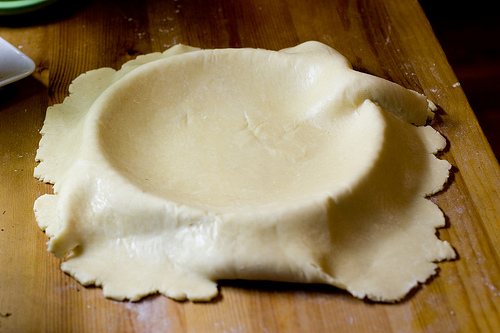
I was sitting down having a cup of coffee and discussing recipes with Elly Hartland recently, when she asked me if I had made Philip Johnson’s goat’s cheese and leek pie. I asked her what was so special about it. “The pastry,” she said, “is so different. It isn’t a shortcrust pastry. It is an olive oil pastry. It’s flaky.”

“Pate brisee,” I thought, my heart dropping to my shoes, “uses olive oil.” I use it all the time and have always called it shortcrust pastry. But of course, it isn’t really shortcrust pastry at all! All those recipes are wrong!

Well, as it turned out, the goat’s cheese pie pastry isn’t even pate brisee; it is made entirely with olive oil and I don’t care for it much at all. But I was left with the fact that pate brisee is not shortcrust pastry.

Way back when you were all in kindergarten or pre-school, Simone Beck came to Brisbane for a series of cooking demonstrations and to promote her book ‘Simca’s Cuisine’. Simone Beck is best known, not for ‘Simca’s Cuisine’, but for co-authoring that two volume bible ‘Mastering the Art of French Cooking’. We were all very aware of her legendary importance in the world of haute cuisine and were suitably riveted. She made mushroom tartlets (Quichettes aux champignons).  They were delicious and became my stand-by recipe for many years, as you can see if you look at the state of p232 of ‘Simca’s Cuisine’. Pate brisee “A”, she grandly informed us, and Pate brisee “B”, are to be used for ALL savoury dishes. Obediently, I complied. Pate brisee “A” was fine by me; I have never tried “B”, which substitutes white wine for the water and a whole egg for the egg yolk. Perhaps I should.  She says the wine creates an interesting saveur.

Naturally, I then abandoned Nanya’s sweet shortcrust pastry for Simone Beck’s Pate sucree.

The funny thing about that day is that I swear Elly was with me. Obviously I was more impressed than she was!

Well, I have altered all those recipes, or I think I have.  Fortunately dessert tarts weren’t affected. Where, in savoury tarts, pies or quiches it once said ‘Shortcrust pastry’, it now should read ‘Pate brisee, shortcrust pastry or sour cream pastry’. I apologise.

Elly still doesn’t know that she ruined my day.