Uncategorized

ANZAC BISCUITS

Katie Bell makes the most wonderful Anzac biscuits. She is very much a seat of her pants cook, though she objects strenuously when I alter one of her recipes. Here is her recipe, more or less verbatim.

IMG_2545

‘I never get two batches the same; that is the fun of it. I suppose it has something to do with the amount of golden syrup I use.’

1 cup rolled oats

1 cup sugar

1 cup plain flour

¾ cup desiccated coconut

1½ teaspoons bicarbonate of soda

2 tablespoons boiling water

125g butter

1 tablespoon golden syrup (I use more, sometimes 2 tablespoon-ish!!!!)

Combine rolled oats, sifted flour, sugar and coconut. Combine butter and golden syrup, stir over gentle heat until melted.

Mix soda with boiling water, add to melted butter mixture. Stir into dry ingredients.

Spoon dessertspoons of mixture onto greased oven trays. (They spread even more if extra golden syrup is used, so separate them well).

Bake in a slow oven (150C) for 20 minutes or until they look cooked.

Makes about 6 large cookie/biscuits.

Before you begin: Freezing stuff

92047481_10158216893007154_3520284757785051136_oBefore you freeze anything at all, think about the quantities in which you may want to use it later. This applies equally to meat, fish, and to such things as demi-glace, jus, gravy, stock and pureed fruit.

Generally speaking less is better.

There have been many occasions when I have had to thaw twice as much meat as I needed, twice as much demi-glace (that really is a waste) and up to four times as much stock.

None of these should be re-frozen, and none keep indefinitely in the refrigerator.

Even soup should not be frozen in large quantities unless it is for a specific occasion. Plastic containers with a 2 cup or 500ml capacity are a good investment. Make sure they are stackable. I thought Mrs. Crockett containers were great when I first discovered them, now I realise that they are far too big.

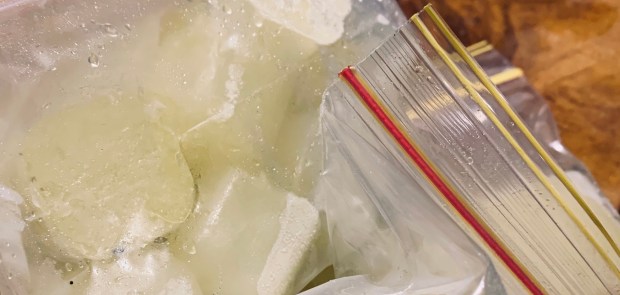
IMG_2167If you get an over abundance of limes or lemons, squeeze them and make small ice cubes. Use them for margaritas, Damascus slings or thai dressings. So much better than fake/concentrate juice.

Survivor tips for newbie chefs in Covid

I have just been laughing at a great YouTube guy who is hilariously teaching you how to cook some pretty simple stuff. And it made me think about mum’s cookbook and some of the really easy recipes in there as well as some pretty nifty tips that might be handy in our time of boredom.

As so many of us are doing, I’m using isolation time to look at the always therelist of things to do given time. Yes I am working from home but I am finding I do have more hours in the day thanks to no commute. One on my Corona list is progressing the Never Ending Cookbook By Mum by a few recipes.

Started before the age of MasterChef and MyKitchenRules, the recipes here are timeless classics. But they are of a style of cooking that doesn’t get the ratings – most ‘reality’ shows expecting Michelin starred sophisticated (performance art) experiences every time.

The recipes here are from 60s-2010 (50 years). There’s one from a CWA (Country Womens’ Association) recipe book which looks post WWII as well as some Ascot Kindergarten ones from the 70s.

They represent the ‘best of home style cooking’ – full of flavour, sometimes a splash more brandy than called for. These recipes they have all been dined on, praised and sometimes burnt by mum, me and my sisters too.

So while I’m not going to spend my free time doing awesome video productions, I will make sure I post a one of mum’s gem tips or an easy peasy recipe.

Anyway, to get on with the show, please enjoy mum’s tips on freezing stuff.

Spicy chorizo sausage with roasted macadamia nut Gnocchi

This is a variation on the River Café Gnocchi with Chestnut and Sausage recipe to suit Australian pantries. Sarah adapted this many years ago when competing with an advertising agency friend in a ‘Cook Off’ when she realised the effort involved in peeling and roasting chestnuts was not necessarily worth the reward. It certainly puts a completely new bent on the original recipe. Certainly, you can’t go past the unique flavour of macadamia nuts and, when combined with caramelised fennel in the tomato sauce, you can’t go wrong!

Potato gnocchi for 6 (See Pasta section). Note that the gnocchi available in supermarkets these days is also fine if you don’t want to make your own. It certainly reduces the preparation time of this meal down to nothing!

Sauce:

200g roasted unsalted macadamia nuts (shelled)

150 g butter

4 fresh chorizo sausages (available from good gourmet butchers), peeled and torn/sliced into thumb sized pieces

1-1/2 large fennel bulbs very finely sliced using thin mandolin

2 cloves garlic, peeled and sliced

2 dried red chillies, crumbled

2 tablespoons chopped fresh sage leaves

150ml red wine

1 dessertspoon caramelised fig balsamic vinegar (Optional)

1x 400g tin peeled plum tomatoes

1 x jar of passata (use own discretion whether this additional tomato sauce is required)

Maldon sea salt and freshly ground black pepper

To Serve:

1 handful fresh sage leaves on stems for garnish

3 tablespoons butter

100g Parmesan, freshly grated

[Note from Sarah] To minimise the number of cleaning required, I use the minimum number of pans. To do this in a single medium, thick-bottomed frying pan I follow this order:

  1. Roast off macadamias – this can be done in a dry frying pan either on the stove top or in the oven (as long as your fry pan does not have a plastic handle). Due to the natural oils in the macadamias additional oil is not required. Make sure to turn the nuts frequently so they do not burn.
  2. Fry off sage leaves on stems for garnish in 3 tablespoons of butter – allow the sage to crisp up and then let sit on paper towels to soak up excess butter. Set aside for garnish
  3. Caramelise the thinly sliced fennel in 150 g butter – do not allow to burn. Set aside to return to sauce towards the end.

For the sauce, melt the butter and fry the sausage meat, stirring and breaking it up over a medium heat to allow the juices to evaporate and the meat to begin to brown. Add the garlic, chilli and chopped (fresh) sage. Add caramelised fennel.

Pour in the wine and increase the heat until the wine evaporates. Add the tomatoes with half their juices. Add balsamic vinegar if including. Add remaining juice from tomatoes and top up with Passata if necessary. Lower the heat and cook for about 30 minutes. Season with salt and pepper. Just prior to stirring in the sauce with the gnocchi, add the roasted macadamia nuts into the sauce.

Cook the gnocchi in batches in a generous amount of boiling salted water. They are ready when they bob up to the surface of the simmering water.

Serve gnocchi with the sauce, topped with grated Parmesan and the crispy sage leaves. Break some sage leaves up and sprinkle and leave a few whole leaves for garnish.

Serves 6.

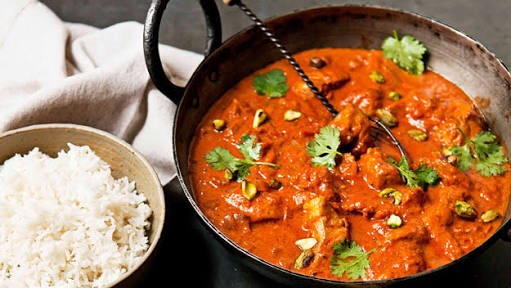
Sitar’s butter chicken

While this isn’t mums and certainly made for our Aussie tastes it is still the best Butter Chicken in Brisbane. 

Sitar originally a one off restaurant in Albion is now a mini franchise in Brisbane. Fortunately it seems that the butter chicken recipe is part of the franchise because it’s been consistently good at 3 locations.

I am copying it to the cookbook in fear that Sitar might one day decide to remove it from their site! 

Ingredients :

1 whole chicken 

2 tomatoes puree in a blender

2 onions, chopped 

1 tbsp ginger-garlic paste 

15 cashew nuts paste 

1 ½ tbsp butter 

3 tbsp cream 

1 tsp chilli powder 

Oil for frying 

salt to taste 


For the marinade :

1 tbsp tandoori masala 
½ tbsp garam masala (cloves, cinnamon and cardamom powdered) 

2 tbsp lime juice 

½ tsp jeera 

5 tbsp yoghurt

Directions

Marinate the chicken in the marinade for 1 whole hour. Heat oil in a non-stick pan and fry the chicken for 10 minutes. 

Remove the chicken and keep aside. In the remaining oil fry add the chopped onions till golden , then add the ginger-garlic paste and fry sprinkling little water now and then, till the oil separates. 

Add the cashew paste, chilli powder, tomato paste and cook for 10 mins. 

Add the butter and the cream and the chicken. Mix well and cook till done. Garnish with coriander.

Visit www.sitar.com.au

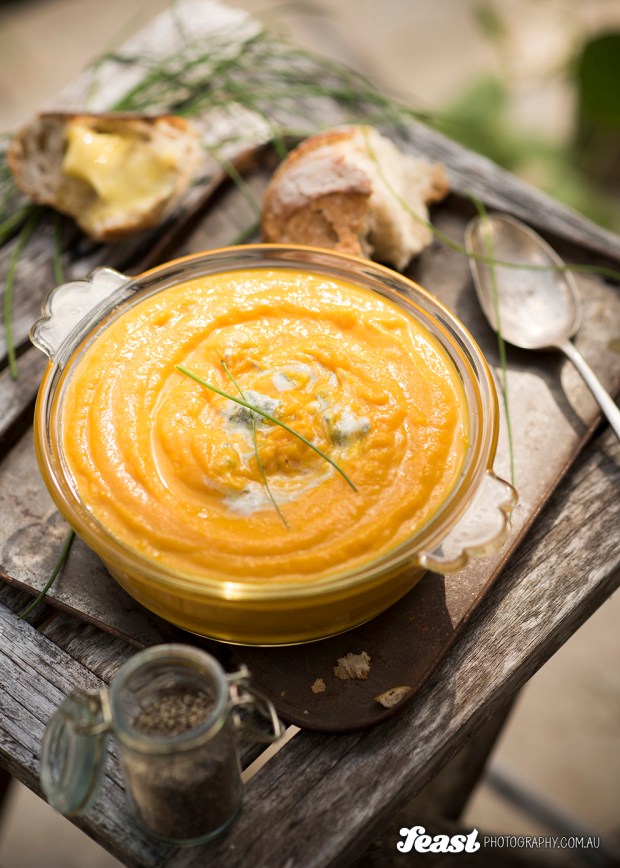
Pumpkin and stilton soup

This one is a slight variation on the pumpkin soup theme. Of course, it isn’t strictly necessary to use Stilton; any good local blue cheese would work just as well. Or nearly as well!

500g pumpkin, preferably Queensland Blue, peeled, seeded and roughly chopped
250g carrots, peeled and roughly chopped
250g leeks, washed and sliced
1 clove garlic, crushed
Butter
2 litres chicken stock
Nutmeg, freshly grated
Pinch of paprika
30g Stilton, crumbled
¼ cup cream, at room temperature.

Melt butter in a heavy-based casserole, add garlic and leeks and cook gently until limp and transparent. Add pumpkin and carrot and stir to coat. Add chicken stock and spices, cover and simmer gently until the vegetables are tender. Cool and puree in a food processor or pass through a mouli.

Season and re-heat as required.

To serve, combine the Stilton and cream in a food processor. Ladle soup into bowls and swirl some of the Stilton mixture through each serving.

Serves 6 – 8.

Many thanks to Nadine from Feast Photography for the photo.

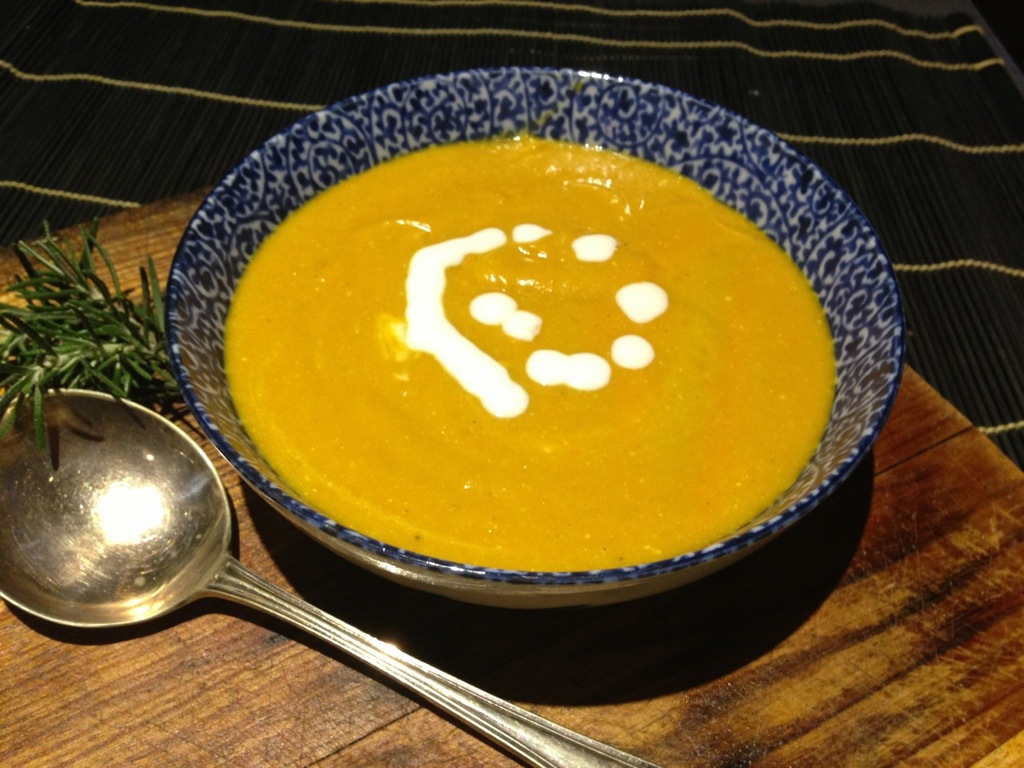
Pumkin soup

20130803-202701.jpg

Queensland Blue* pumpkin, peeled and diced (quantities are difficult here)
3 – 4 large onions, chopped
Oil for cooking
Good quality chicken stock or vegetable stock
Nutmeg, grated
Cream, sour cream, or mascarpone
* If you want to be healthy and avoid cream, use home made almond milk
Salt and freshly ground pepper

Heat the oil in a heavy based frying pan, add onion and sauté until tender.

Add pumpkin in batches, and cook a little, making sure not to burn the onion.

Transfer onion and pumpkin to a heavy casserole, add chicken stock, and simmer gently until the pumpkin is tender.

Puree the pumpkin and onion mixture in a food processor, or pass through the fine sieve of a mouli.

Just before serving, stir in cream, sour cream, mascarpone (or almond milk), being careful not to add too much. Add a little grated nutmeg, and season to taste.

*Queensland Blue pumpkins are hard to find these days as they have very tough skins. To substitute, use another blue skin variety.

Bechamel sauce

Bechamel-sauce
Many recipes will tell you to use hot milk when making a bechamel sauce. In fact, I don’t know of anybody who does. Do try not to use milk that has come straight from the refrigerator.

50g butter
50g milk
600ml milk

Melt butter in a saucepan and add the butter. Stir to combine. Cook the roux over gentle heat to cook the flour. Remove the saucepan from the heat and add a little of the milk. Stir well, pressing any lumps out with the spoon. Add a little more milk and repeat. You must eliminate the lumps before returning the pan to the heat. When the mixture is smooth, return to heat and cook until it thickens. Remove from heat again and add more milk. Stir vigorously until the sauce is again smooth. If any lumps are left in the sauce in its early stages, they will be almost impossible to remove later. Remember that it is the addition of a cold liquid to a hot base that causes the lumps to form, so the saucepan must always be off the stove when the milk is added. Continue to stir until there are no lumps, add more milk then cook until the sauce reaches the desired consistency. Season with salt and pepper if desired.

Sauce Creme
Sauce Crème is a white sauce made using some cream to replace some of the milk. Obviously it is richer than béchamel sauce.

(Photo: Heraldsun.com.au)

White sauces

White sauce is the generic name for a whole collection of sauces having one thing in common: they are based on a roux of equal weights of butter and flour. They are called white sauces because the roux is not coloured and the resulting sauce remains white. It is the liquid that usually varies in white sauces. Technically, the sauce we know as white sauce is actually bechamel sauce, the liquid used being milk. With all white sauces the proportions are 50g butter, 50g flour and 600ml liquid to give 600ml of sauce. In all white sauces it is important to fry the roux gently to ‘cook’ the flour. This breaks up the gluten content of the flour and ensures that the resulting sauce does not have a floury taste that no amount of cooking will remove later.  

Osso Buco

Osso Buco is a specialty of Milan where it is traditionally served with a risotto made with onions, wine and Parmesan cheese coloured with saffron. I will try to remember to include the recipe. Failing the risotto, simply serve with fluffy white rice.

The Milanese have a special cooking pot for osso buco. It is a very wide, shallow cast iron casserole with a lid, and it allows the veal shanks to be cooked in one layer so that the meat does not fall off them. You can actually tie the meat onto the bone, remembering to cut the string off before presenting them!

Ask the butcher to prepare the veal shanks for you. The veal classified as osso buco sold in a lot of shops is way too thin. The shanks should be about 6cm long and each should weigh about 750g.

6 veal shanks, each 750g in weight
3 – 4 large onions, finely chopped
2 cloves garlic, crushed
3 carrots, finely chopped
4 sticks celery finely chopped
Plain flour
3 x 400g cans Italian tomatoes or 1 bottle Italian tomato sauce
Oil for cooking
1 cup dry red wine
1can Campbell’s beef consommé
1 teaspoon dried basil
1 teaspoon dried thyme
1-2 bay leaves
1 strip lemon peel
Salt and freshly ground pepper

Zested lemon peel to garnish, a good teaspoon full for each person.
Parsley, finely chopped to garnish

Tie the veal shanks firmly with string. Heat oil in a heavy based frying pan and fry the shanks until they are well browned on all sides. Carefully stand the shanks upright in a heavy casserole so that the marrow does not fall out of the bones. Sprinkle well with seasoned flour, moving the shanks gently so that the fat on the meat absorbs the flour. Deglaze the pan with a little of the consommé and add to the meat. Heat more oil in pan and add the onions and garlic. Sauté gently for a few minutes, then add the carrots and celery and sauté for a further few minutes. Transfer the vegetables to the casserole, distributing them evenly around the shanks.

If using canned tomatoes, pass them through a sieve or mouli first so they are well broken up before they are added. If using Italian tomato sauce, it is already done for you.

Pour away any fat that remains in the frying pan and add the tomatoes or tomato sauce, the tomato paste, red wine and herbs, including the strip of lemon rind and the consommé. Bring sauce to the boil, adjust seasonings and pour over the shanks. If there is not enough liquid to cover the meat, carefully add some water.

Preheat oven to 170C and bake casserole, covered, for about 2 hours, or until veal is very tender.

To serve, carefully remove the cooked shanks with a slotted spoon and place one on each plate. Take the lemon rind out of the sauce and discard. Remove the string and cover each shank with sauce. Garnish with combined lemon zest and chopped parsley.

Serve with Milanese risotto or plain white rice.