Cookbook

Crab in Black Bean Sauce

crab-in-black-bean-sauce

The ingredients in this crab recipe are quite similar to the ingredients in Steamed Crab Cantonese, but the cooking method is different – in this one the crabs are fried in a wok. You have all had this cooked with black bean sauce, but I have done it without too, when it is almost unrecognisable as the same recipe. You must have a lid for your wok for this recipe. (You should have one anyway.) The quantities given here are for one mud crab or approximately two sand crabs.

1 mud crab or 2 sand crabs, uncooked, but well cleaned
3 tablespoons oil
1 tablespoon sesame oil
1 egg, lightly beaten

Sauce:
2 teaspoons fresh ginger, peeled and grated
2 shallots, finely chopped
1 clove of garlic, crushed
1 tablespoon fermented black beans, well rinsed and chopped, or 1 tablespoon black bean sauce (both optional)
2 tablespoons rice vinegar or mirin
1 tablespoon light soy sauce
¾ cup stock or water
2 teaspoons cornflour dissolved in 1 tablespoon water
Shallots to serve
Freshly ground black pepper

Have all ingredients ready and at hand before you begin. Heat wok over high heat until hot, add oil, swirl; add ginger, garlic, then fermented black beans or black bean sauce if using either. Stir quickly for 30 seconds. Add crab pieces, splash in the rice vinegar or mirin and stir a few times as it steams up, turning the crab pieces to ensure they are well coated with the hot oil. Add soy sauce, stock or water and the pepper. Even out the crabs in the wok, cover and steam for 4 minutes for sand crabs, longer for mud crabs, the time depending on the size of the claws.

When you think the crabs are almost cooked, uncover and stir well. Lower the heat, give the cornflour and water a good stir and pour it into the sauce. Add sesame oil and stir until the sauce thickens.

Then pour the beaten egg over the crab in a circular motion, remove from heat and let the egg flow into the sauce.

Remove to serving platter and serve immediately with shallots.

Warm Thai Beef Salad

Warm Thai Beef Salad

Annie Douglass made this for Opening Day on ‘Nerang’ one year, beautifully presented on a huge serving dish, right down to the chilli flowers, one of which Dad actually ate! Or it can be simply tossed.

The salad ingredients vary enormously from the mundane to the exciting. Warm roast fillet of beef tastes wonderful at any time with a Thai dressing, but the dish should contain some more exciting ingredients than tomato, capsicum, onion and chilli. Snake beans, if in season, are perfect, chopped peanuts almost a must. Snow peas are good too. Think about adding some grated green papaw, some ruby red grapefruit segments with their membranes removed so that you get little droplets of red grapefruit through the salad. Coriander and mint are, of course obligatory. Without them you might as well leave out the beef. Above all it should taste fresh.

Essentials:
750g piece of eye fillet of beef, well trimmed
1 clove garlic, crushed
Peanut (preferably), or canola oil
1 cup fresh coriander leaves, shredded
½ cup fresh mint, shredded
½ – ¾ cup chopped peanuts
2 baby red chillies, seeded and very finely sliced
6 shallots, finely sliced

Dressing:
¾ cup fish sauce (nam pla)
2 tablespoons lime juice
1 dessertspoon oyster sauce
Sugar to taste

Salad Ingredients:
Choose from the following, trying to make the selection as interesting as possible:
Snake beans
Snow peas
Water chestnuts
Cherry tomatoes
Salad onion, sliced
Cucumber
Bean sprouts
Red capsicum, sliced
Garlic chives
Grated green papaw
Segmented ruby red grapefruit, membranes and seeds removed

Rub the beef with oil and garlic and roast in a pre-heated oven to rare or medium rare (about 20 minutes, depending on thickness). This should be done as close as possible to serving time so that the beef is still warm when served.

Blanch the snake beans in boiling water for 1 minute, drain and plunge into cold water to stop them cooking further. Strain and cut if desired. Top and tail the snow peas and remove strings. Blanch in boiling water for 30 seconds and plunge into cold water to stop them cooking further. Strain and combine with the snake beans. Slice the water chestnuts and the capsicum. Chop the garlic chives as coarsely as you like. Grate the green papaw if using, outer part of the fruit only. Peel the grapefruit, divide into segments and carefully remove seeds. Ease out the little ‘capsules’ of grapefruit, trying not to squash them as you do so.

Slice the beef as thinly as possible. Either arrange on plates or place in a bowl with other salad ingredients. Sprinkle with chopped peanuts, coriander, mint, chilli and shallots. Pour dressing over the whole salad.

Photo by: http://soojerky.blogspot.com.au

Whiting Cooked in Rice Flour with Lemon and Garlic

IMG_3390

This is our preferred way of cooking whiting on the boat for breakfast. It is simple and quick, but the flavour of the whiting comes through beautifully. The whiting must, of course, be very fresh. Be generous with the lemon juice. It caramelises a little in the pan and the whiting are tossed in it after they have cooked.

20 whiting fillets
Ground rice
Butter
2 cloves garlic, crushed
Juice of 1 large or 2 small lemons
Salt and freshly ground black pepper
A handful of finely chopped parsley or thyme leaves
Lemon wedges, extra, to serve

Dredge the whiting in the ground rice. Heat the butter in a large heavy-based frying pan and add the garlic. Add the whiting fillets, in batches, and cook for about 1 – 2 minutes before turning and cooking the other side. The fillets should be almost breaking up. Keep warm whilst remaining fillets are cooked.

Remove the fish from the pan and add the lemon juice. Allow the lemon juice to caramelise a little, then return all the whiting fillets to the pan. Turn them so that all the fillets are coated with lemon.

Hard Sauce

hardsauce

Hard Sauce is a must with Christmas pudding even if everybody has eaten too much by then to appreciate it.

90g butter
¾ cup icing sugar
½ cup ground almonds
1 tablespoon brandy
2 egg whites, stiffly beaten

Cream butter until soft. Add sifted icing sugar and beat until light and creamy. Add ground almonds and beat until mixed. Beat in brandy, then fold in stiffly beaten egg whites. Allow to set in a shallow dish. Chill will before serving.

Photo by: tasteofhome.com

Frozen Christmas Pudding

frozen-christmas-pudding

This recipe came originally from Peg Tiffin. Despite the fact that it is frozen, this pudding is very rich and will fill you up just as much as a hot one!

2 eggs
300ml milk
2 tablespoons brown sugar
1 –2 teaspoons cocoa
1 teaspoon mixed spice
½ teaspoon cinnamon
½ teaspoon nutmeg
1½ -2 cups mixed raisins and sultanas
Brandy
¼ cup chopped walnuts
¼ cup chopped almonds
300ml cream, whipped
6 large spoonfuls vanilla ice cream, slightly melted

Soak fruit in a generous quantity of brandy overnight. Strain and retain liquid to add later to pudding.

Heat milk to just below boiling point. Beat egg yolks with brown sugar until light and thick. Gradually stir in scalded milk. Return this mixture to the saucepan and stir over a very low heat or in the top of a double boiler until the custard coats the back of a spoon.

Add cocoa and blend well. Allow to cool. Add spices, fruit and nuts to the custard mixture. Add the brandy in which the fruit soaked. Whip cream and fold into the mixture, then stir in the slightly melted ice cream.

Freeze.

Photo by: Donna Hay

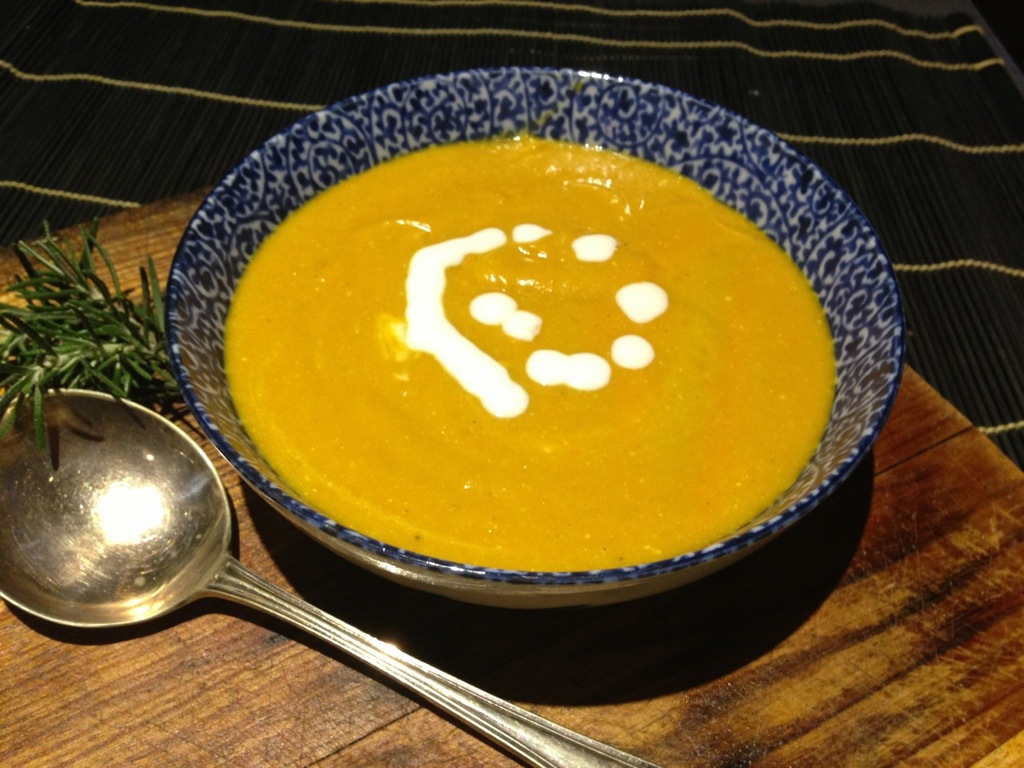
Pumkin soup

20130803-202701.jpg

Queensland Blue* pumpkin, peeled and diced (quantities are difficult here)
3 – 4 large onions, chopped
Oil for cooking
Good quality chicken stock or vegetable stock
Nutmeg, grated
Cream, sour cream, or mascarpone
* If you want to be healthy and avoid cream, use home made almond milk
Salt and freshly ground pepper

Heat the oil in a heavy based frying pan, add onion and sauté until tender.

Add pumpkin in batches, and cook a little, making sure not to burn the onion.

Transfer onion and pumpkin to a heavy casserole, add chicken stock, and simmer gently until the pumpkin is tender.

Puree the pumpkin and onion mixture in a food processor, or pass through the fine sieve of a mouli.

Just before serving, stir in cream, sour cream, mascarpone (or almond milk), being careful not to add too much. Add a little grated nutmeg, and season to taste.

*Queensland Blue pumpkins are hard to find these days as they have very tough skins. To substitute, use another blue skin variety.

Fish stock (fish fumet)

Fish and other seafood must be treated differently from meat or chicken when making stock. It cannot be simmered for hours as meat can, or the resulting stock will be bitter, and quite toxic. Fish fumet always contains white wine, but you can make it without and add the wine later, when you are using the stock in a soup or sauce.

For years we have used a scaled and cleaned whole bream or whiting frames as the starting point for fish fumet, but fish frames, particularly reef fish frames are usually available very cheaply from any good fishmonger. I have used red emperor, nanagai, coral trout and even Tasmanian salmon, although the salmon frames give a distinctly salmon taste.

50g butter or a little grapeseed oil
3 sticks celery
1 medium onion, chopped
Sprigs of parsley and thyme
½ bay leaf
½ bottle of dry white wine
Whiting frames and/or scaled and cleaned whole bream, or
1 or 2 white fleshed reef fish frames
Water to cover

In a large stockpot, melt the butter or heat the oil and add the herbs, onions, carrots and celery. Cook over a gentle heat without browning. Add the fish frames and /or the whole bream and allow the frames to saute briefly, turning them to ensure even cooking.

Add the white wine. Cover the pot and increase heat to high. When the wine has reduced to half its previous volume, put in enough cold water to cover the fish. Bring back to the boil, reduce heat, skim and simmer the stock for no more than 30 minutes.

Strain the stock through a coarse sieve, pressing the fish and vegetables with the back of a spoon to release as much flavour as possible. Return fish and vegetables to the pot, add a little boiling water and stir well, but do not cook any further. Strain this into the stock. Discard the frames and the vegetables and re-strain the stock through a fine sieve.

Refrigerate stock so that the fats rise to the surface, then skim. (Fish frames do contain fat.)

Fish stock will keep well in the freezer.

Roasted (brown) chicken stock

I have never had a problem with chicken carcasses being placed straight in the stock pot without prior roasting. However Philip Johnson included a recipe for roasted chicken stock in his e’cco 1 cookbook, giving it as an alternative to traditional chicken stock. Gordon Ramsey, the bad boy of English cooking is unequivocal. White chicken stock, he says, is anaemic and to give it more depth of flavour, the first thing to do is to brown the carcasses. (He actually calls it Brown Chicken Stock.) I am sticking with Philip’s  name, (because a sauce made from browned chicken carcasses will not, technically, be a brown sauce). This recipe is a combination of both of theirs, plus mine. They both include raw garlic in the stock and I believe that raw garlic gives a harsh, unpleasant flavour. If I were using garlic, I would use garlic confit.

2 kg chicken bones and carcasses
1 carrot, diced
1 – 2 onions, roughly chopped
a few cloves of garlic confit (optional)
1 leek, well washed and sliced
2 tablespoons tomato puree
4 sprigs thyme
1 bay leaf
1 teaspoons white peppercorns
a few parsley stems
1 cup of white wine

Preheat the oven to 200C. Place chicken carcasses in a roasting pan and roast until golden. Take care not to colour the chicken too much as this will make the stock bitter.

Using tongs or a slotted spoon, transfer the bones to a large stock pot and add remaining ingredients, except the wine. Cover with cold water and bring to the boil, skimming off any impurities that rise to the surface.

Pour off and discard any fat from roasting pan, then place pan over moderate heat and deglaze by adding the wine and stirring well to loosen the sediment. Pour mixture into stock pot and continue to simmer gently for 1 ½ hours, skimming occasionally.

Strain stock, cool and refrigerate overnight. Next morning, carefully remove any fat from the surface.

Freeze until ready to use.

Chicken stock

Making Chicken Stock

Chicken frames, as many as you can comfortably fit in the stock pot
1 – 2 onions, roughly chopped
1 carrot, chopped
4 – 6 sticks celery roughly chopped
A handful of parsley
Water to cover
Freshly ground black pepper

Place the frames in a large stock pot, add the onion, carrot, celery and parsley and cover with water. Bring to the boil, then reduce heat, then cover and allow to simmer over very low heat for 5 – 6 hours if possible.

Strain, pressing the bones with the back of a spoon, to release all the juices. Transfer to a clean container and allow to cool. Refrigerate as soon as possible, then leave overnight until stock is completely cold and all fat has risen to the surface. De-grease the stock carefully. This is particularly important if you are making a consomme. The stock should be a thick jelly. Reheat just enough to liquefy the stock and pour into airtight containers, some of which should be no bigger than 250ml capacity.

Freeze when cool.

 You will notice that I never add salt to chicken stock. I prefer to season the dish to which the stock is added.

Stock or Bouillon

It should come as no surprise to you that I consider good stock to be the single most important ingredient to have on hand in the kitchen; regardless of what the recipe says, a stock cube crumbled in water is no substitute and often adds unwanted saltiness. We are lucky to be able to buy commercially prepared stock these days and this is quite good. Always have chicken, beef and vegetable stock on hand, whether it be commercially or home made, and when a recipe tells you to add water, think about whether substituting stock would be an improvement. When Nanya boiled peas, beans or carrots, (never vegetables of the cabbage family, such as broccoli, brussels sprouts or cauliflower,) the water was always kept to be added to gravies or soups.

 Campbell’s make a chicken consommé and a beef consommé, sold as canned soups, and these are excellent, as in both the stock has been reduced to a jelly and then clarified. They also make chicken, beef, fish and vegetable stocks, which are very acceptable.

 Stocks add depth to dishes. They transform soups, sauces, gravies, casseroles and a host of other dishes from ‘thin’ and uninteresting, to tasty and satisfying. The three basic stocks are chicken and beef, often called ‘bouillon’, and fish, which is often referred  to as ‘fumet’. You will notice that a fish fumet is made using white wine, although if the fumet is destined to be fish soup, the wine can be added later when the soup is being made.

 The technique for making beef stock is different from that of ‘white’ chicken stock.  It is the same, however, for roasted chicken stock. With beef stock, the beef, bones, chicken carcasses and some of the vegetables are usually roasted with a little oil or fat in a baking dish for an hour or so before being added to the stock pot. This procedure helps to colour the stock, and if it is not done at this early stage, no amount of simmering later will achieve the same result. Veal bones are often used, either with beef bones or on their own. Mushroom skins or stems and brown onion skins add colour. If making an ox-tail consommé, the beef bones should obviously be ox-tail. You will notice that demi-glace is really nothing more than a very sumptuous beef bouillon simmered very slowly for a very long time until it has reduced to sauce consistency.

 Chicken stock is very easy to make, especially now that boned chicken breasts and thighs are more popular than whole chickens and most specialty chicken shops are trying desperately to get rid of the carcasses. Unfortunately some of them are mincing all their carcasses for pet mince; while this is great for the pets, it could become a disaster for cooks. Whole chickens can be used, but this is obviously expensive and quite unnecessary. If using a whole chicken, always supplement it with extra carcasses.